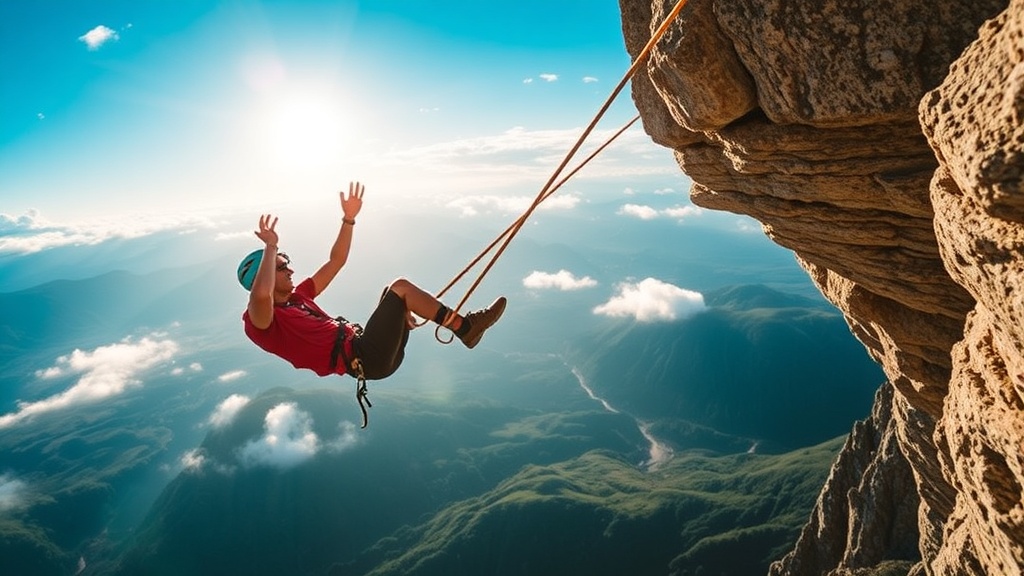
Beyond the Drop: 7 High-Adrenaline Destinations for Your Next Bungee Leap
Queenstown, New Zealand: The Bungee Capital
Verzasca Dam, Switzerland: The Iconic Leap
Victoria Falls, Zimbabwe: High Altitude Thrills
Bloukrans Bridge, South Africa: The Longest Jump
Interlaken, Switzerland: Alpine Heights
Monte Kaolino, Germany: European Heights
The Great Gorge, USA: American Adrenaline
Statistically, the human brain is hardwired to resist the sensation of freefall; the amygdala triggers a fight-or-flight response long before your feet even leave the platform. Even after 400 jumps across five continents, that spike in cortisol remains a constant companion. That physiological resistance isn't a flaw—it is the very reason the descent feels so profound. While many travelers seek relaxation, the true adrenaline seeker looks for the edge of the abyss. To find the ultimate rush, you must look beyond the standard tourist bungee sites and seek out locations that offer height, technical complexity, and raw natural beauty.
1. Queenstown, New Zealand: The Global Epicenter
New Zealand is not just a destination; it is the birthplace of commercial bungee jumping. If you want to experience the gold standard of technical precision and sheer scale, the AJ Hackett Nevis in Queenstown is the non-negotiable starting point. The Nevis Bungie stands at a staggering 134 meters (440 feet) above the canyon floor. Unlike smaller jumps, the Nevis utilizes a high-wire system that moves you out over the center of the gorge, stripping away any sense of proximity to the solid ground.
When preparing for a jump of this magnitude, focus on your breathing techniques. High-altitude jumps can exacerbate shallow breathing due to the wind shear in the canyon. Practice rhythmic, diaphragmatic breathing—inhaling through the nose and exhaling through the mouth—to stabilize your heart rate before the jump master gives the count. The sheer scale of the Nevis requires a mental shift from "falling" to "controlled descent." The tension in the cord at the bottom of a 134-meter drop is immense, and the engineering behind the way the cord stretches is a marvel of modern physics.
2. Verzasca Dam, Switzerland: The Cinematic Descent
For those who crave a descent with a legendary pedigree, the Verzasca Dam in Ticino offers a unique architectural thrill. This is the site of the iconic bungee jump from the James Bond film GoldenEye. The jump is characterized by a vertical drop against a massive, man-made concrete structure, which provides a stark, intimidating visual contrast to the lush green valleys of the Swiss Alps. The sensation here is one of absolute verticality; there is no gradual slope, only a sheer 220-meter wall of concrete.
The technicality of jumping at a dam involves managing the visual feedback of the massive structure. Because the wall is so close and so straight, the sensation of speed is amplified. To maximize the experience, ensure you are wearing high-quality, form-fitting athletic gear. Loose clothing can flap violently in the wind tunnels created by the dam's architecture, which can be a distracting sensory input during the freefall phase. This jump is as much about the visual intimidation of the engineering as it is about the physical drop.
3. Bloukrans Bridge, South Africa: The High-Altitude Gorge
South Africa offers one of the most visually striking bungee experiences in the world at the Bloukrans Bridge. Dropping 216 meters above the Bloukrans River, this jump is a masterclass in natural landscape integration. The jump takes place from a high railway bridge, meaning the transition from the solid, vibrating structure of the bridge to the weightlessness of the air is incredibly sharp. The sound of the river below is often drowned out by the rush of wind, creating a sensory vacuum during the first three seconds of the drop.
A crucial tip for the Bloukrans jump is to manage your gaze. Many jumpers make the mistake of staring directly down at the riverbed, which can trigger intense vertigo. Instead, pick a point on the horizon or slightly past the edge of the bridge. This helps the vestibular system maintain a sense of orientation. If you find yourself struggling with the mental preparation, remember that the harness system is designed to handle much higher G-forces than a human body naturally experiences during a standard fall, providing a safety margin that allows you to focus on the thrill rather than the fear.
4. Victoria Falls, Zimbabwe: The Natural Wonder Leap
While most bungee jumps are engineered from man-made structures, the jumps near Victoria Falls offer a more visceral connection to the raw power of nature. The proximity to one of the world's largest waterfalls adds an auditory layer to the adrenaline: the constant, low-frequency roar of the Zambezi River. This sound acts as a natural white noise that can either soothe or heighten your anxiety depending on your mental state.
When jumping in this region, environmental factors like humidity and mist play a significant role. The spray from the falls can make surfaces slick and the air heavy. This is why checking your equipment and the stability of the platform is vital. If you are planning a trip to this region, you might also be looking at how to manage your energy levels and sleep during travel. For instance, if you are transitioning between time zones and need to stay sharp for your jump, learning how to smoothly shift your sleep schedule can ensure you aren't fatigued when you hit the platform.
5. The Macau Tower, China: The Urban High-Rise
If your preference leans toward urban vertigo rather than natural landscapes, the Macau Tower is the ultimate destination. At 233 meters, it is one of the highest commercial bungee jumps in the world. The experience is fundamentally different from a canyon jump because you are surrounded by the skyline of a high-density city. The visual stimuli are much more complex; instead of a river or a forest, you see skyscrapers, streets, and moving traffic far below.
The mental challenge here is the "visual noise." The movement of the city can be incredibly distracting. To combat this, focus on the "tunnel vision" technique. By narrowing your field of vision to the immediate edge of the platform, you can shut out the movement of the city below until the moment of release. This helps in maintaining the psychological "bubble" required to execute a clean, decisive jump without hesitation.
6. Braamfontein, South Africa: The Urban Edge
For a shorter, more frequent hit of adrenaline, the urban bungee jumps found in metropolitan areas like Johannesburg offer a different rhythm. These jumps are often more about the technicality of the equipment and the speed of the experience rather than the sheer height. They are perfect for those who want to refine their "jump reflex"—the ability to go from a state of high tension to total relaxation in a split second.
To master the jump reflex, work on your "pre-jump ritual." This involves a consistent sequence of movements: checking your gear, a specific breathing pattern, and a mental countdown. Having a ritual reduces the number of variables your brain has to process, allowing you to bypass the hesitation that often leads to a "stutter jump" (where the jumper moves halfway off the platform before fully committing). A clean jump is a decisive jump.
7. The Scandinavian Fjords, Norway: The Cold Water Descent
The final destination for the truly dedicated is the rugged coast of Norway. Bungee jumping in the proximity of the fjords introduces a new variable: temperature. The air is often significantly colder, and the visual of the deep, dark glacial waters can be psychologically taxing. The sheer verticality of the fjord walls creates a sense of isolation that is unparalleled.
When jumping in cold environments, your muscles tend to tense up more readily. This tension can actually make the "rebound" at the bottom of the cord feel more jarring. To mitigate this, perform a thorough warm-up of your core and limbs before reaching the platform. Keeping your blood flowing and your muscles limber will help you handle the sudden change in pressure and temperature during the descent. This is an environment where physical preparation is just as important as mental fortitude.
Technical Summary for the Serious Jumper
No matter which of these seven destinations you choose, the fundamentals of a successful bungee jump remain the same. You are dealing with gravity, tension, and your own nervous system. To elevate your experience from a mere "scary moment" to a profound achievement, keep these three pillars in mind:
- Visual Anchoring: Never look straight down at the impact point; look toward the horizon to maintain balance.
- Controlled Respiration: Use rhythmic breathing to manage the spike in adrenaline and prevent hyperventilation.
- Commitment: The moment of hesitation is the enemy of the thrill. Once the count reaches one, move with total intention.
The goal of bungee jumping isn't just to survive the fall; it is to master the moment where fear meets physics. Whether you are standing over the Nevis canyon or the Macau skyline, the descent is a testament to your ability to face the unknown and come out the other side exhilarated.