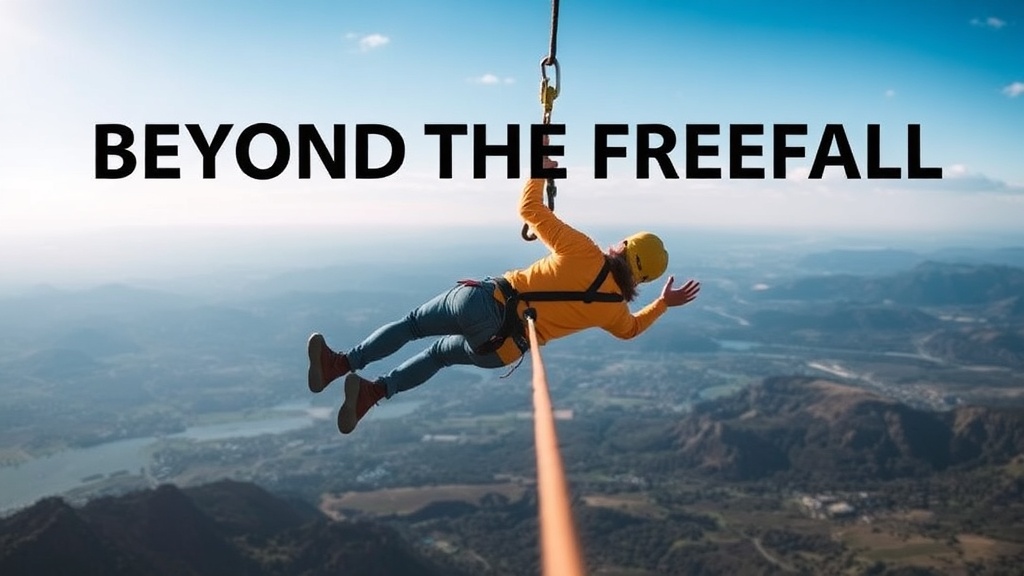
Beyond the Freefall: Life's Unscripted Lessons from the Bungee Cord

Does Stepping Off the Edge Actually Change How You See Fear?
There's a common misunderstanding that to hurl yourself from a great height, tethered only by a glorified rubber band, you must be utterly fearless. Many people think adrenaline junkies simply don't feel fear, or that they somehow conquer it completely. That couldn't be further from the truth. The reality is, every single time I stand on that platform—be it 40 meters over a river or 134 meters above a canyon—my heart pounds, my palms sweat, and that primal instinct screams, "Don't!" Bungee jumping isn't about the absence of fear; it’s about acknowledging it, understanding it, and choosing to act anyway. It's an intense, visceral education in the mechanics of fear and decision-making, offering profound insights that extend far beyond the jump itself.
This isn't a guide to eliminating your anxieties about heights or overcoming your deepest phobias overnight. Instead, we’re going to explore what a bungee jump truly teaches you about yourself, about courage, and about how you navigate the challenging moments life throws your way. It’s about the unexpected mental dividends earned from that brief, exhilarating plummet.
Can a Single Jump Improve Your Decision-Making Under Pressure?
One of the most immediate, and perhaps least anticipated, lessons from bungee jumping is how it sharpens your ability to make decisions when every fiber of your being is telling you to freeze. On the platform, time seems to stretch and warp. The wind whispers, the cord waits, and the world below seems both impossibly far and terrifyingly close. It’s in that micro-moment, just before you lean into the void, that you experience a fascinating interplay between your rational mind and your ancient, instinctual brain. Your amygdala is firing, screaming danger, while your prefrontal cortex is—hopefully—reminding you of the checks, the safety briefings, and the exhilaration waiting on the other side. This isn't just theory; research suggests fear can drastically alter our risk assessment, often leading us to overestimate threats.