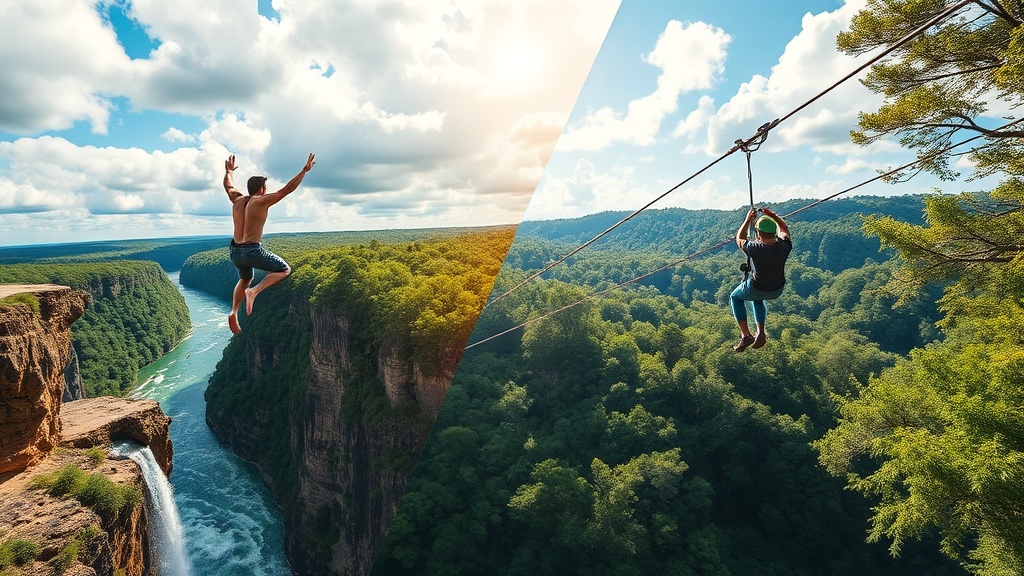
Bungee Jumping vs Ziplining: Which Adventure Thrill Wins in 2026?

Ever wonder whether the free‑fall of bungee or the soaring glide of ziplining gives you the bigger rush? In 2026 both sports are evolving fast, but they still cater to different adrenaline cravings. Let’s break down the two, side by side, so you can decide which jump‑or‑glide adventure earns your next ticket.
What’s the core experience difference?
When you bungee jump, you’re hooked to an elastic cord that snaps you back up after a heart‑pounding plunge. Ziplining, on the other hand, slides you along a steel cable from point A to B, often over breathtaking scenery. The sensation is less of a free‑fall and more of a sustained, high‑speed flight.
Which is safer in 2026?
Both sports have rigorous safety standards, but the risk profiles differ. Bungee relies on cord elasticity, weight‑limit calculations, and redundant anchoring. Ziplining uses sturdy steel cables, braking systems, and regular harness inspections. According to the International Association of Amusement Parks and Attractions (IAAPA), zipline injury rates have dropped 30% since 2020 thanks to smart‑sensor brakes, while bungee injuries remain low but are typically linked to operator error (see my essential safety checklist).
How do the costs compare?
Budget matters. A single bungee jump can range from $70 in New Zealand to $200+ at premium sites like the Bloukrans Bridge. Zipline tickets vary widely: a short 500‑meter line may cost $30, while a multi‑course adventure park can run $150‑$250. If you’re hunting thrills under $200, check out my top under‑$200 bungee spots or the Zipline.org directory for price filters.
What about scenery and location options?
Bungee jumps are often perched on dramatic cliffs, bridges, or towers—think the iconic Bloukrans Bridge or the new Lotus Tower in Sri Lanka. Ziplines can weave through rainforests, over canyons, and even urban rooftops, offering longer visual journeys. If you crave a panoramic view, ziplining in Costa Rica’s Monteverde Cloud Forest might beat a quick drop off a bridge.
Which is more beginner‑friendly?
Both require a basic health clearance, but ziplining tends to have lower height anxiety triggers because you stay upright and see the ground. Bungee’s initial free‑fall can be intimidating for first‑timers. My personal guide on what it’s like working as a jump master explains how we prep newbies for that first plunge.
What gear should I bring?
For bungee, a snug harness, shoes with good grip, and a waterproof bag for your phone are essential. Zipliners need a harness, gloves for the brake handle, and a lightweight windbreaker. The 2026 gear trends article highlights smart‑sensor harnesses that work for both sports.
Which offers better photo/video opportunities?
Both are Instagram gold, but bungee gives you that instant “mid‑air” freeze frame, while ziplining provides a sweeping landscape shot. Pair your GoPro Hero 12 (see my mount guide) with a chest mount for bungee, or a head mount for ziplining to capture the full glide.
Final verdict: Which should you pick?
If you crave a short, intense adrenaline spike and love the feeling of being pulled back up, bungee jumping wins. If you prefer a longer, scenic ride that lets you soak in the view while still getting your heart racing, ziplining takes the lead. My personal recommendation? Try both on the same trip—start with a zipline for the warm‑up, then finish with a bungee for the ultimate drop.
Takeaway
Pick your thrill based on safety comfort, budget, scenery, and how you want to capture the moment. Whichever you choose, double‑check operator certifications, pack the right gear, and remember: the cord or cable is only as good as the people who set it up.