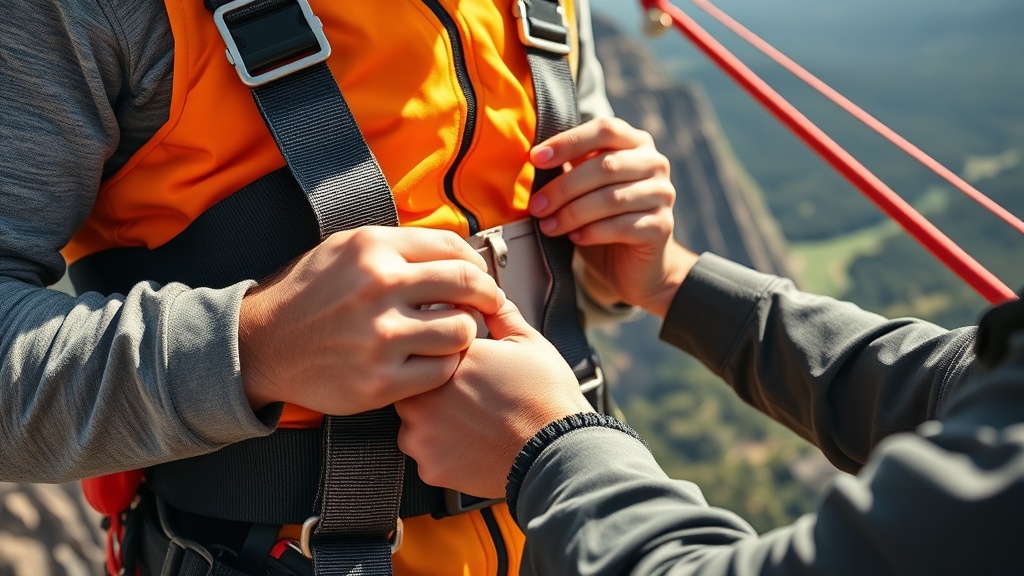
Essential Safety Checks Before Every Bungee Jump

You're standing on the edge of the platform at the Nevis Bungy, 134 meters above the valley floor. Your heart is hammering against your ribs, the wind is ripping past your ears, and every instinct in your body is screaming at you to step backward. The only thing standing between you and the rocks below is a latex cord and the team around you. But how do you know you are actually safe?
If there's one thing I’ve learned from logging over 400 jumps globally and working as a jump master, it’s that surviving the drop has nothing to do with luck. It is entirely about procedure. Bungee jumping isn't an extreme sport for the operators; it's an exercise in meticulous, uncompromising engineering and safety checks. Before you even get close to the ledge, an entire system of redundancies has been activated to ensure you come back up.
Here is the unfiltered breakdown of the essential safety checks that happen before every single bungee jump.
What Are the Essential Safety Checks for Bungee Jumping?
When you jump with a reputable operator, particularly here in New Zealand where the sport was commercialized, you are participating in a highly regulated activity. The New Zealand guidelines for adventure tourism are the gold standard globally, and they dictate a rigorous process. Let's walk through exactly what we look for.
How Do Operators Weigh and Categorize Jumpers?
The very first thing that happens when you arrive at a jump site is the weigh-in. This is not a rough estimate. You will be weighed, often multiple times on calibrated scales, and your weight will be written on your hand, your ticket, or directly communicated to the jump deck crew.
Why is this so critical? Bungee cords are not one-size-fits-all. They are carefully constructed from hundreds of strands of extruded latex, and different cords are used for different weight classes. If you weigh 65kg, you need a different cord tension than someone who weighs 110kg. The jump master uses your exact weight to select the correct cord and adjust the static line length to ensure your trajectory and rebound are perfectly safe. If the weight is wrong, the physics change, which is why we never guess.
What Is the "Double-Check" System for Harnesses?
Once you are on the platform, it’s time to get geared up. You will notice that you are never attended to by just one person. The global standard for bungee jumping is the dual-check system.
One jump master will fit your harness, securing the buckles and tightening the straps. Then, a completely independent, second jump master will visually and physically inspect every single connection point. They will pull on the straps, check the carabiners to ensure they are locked and loaded correctly, and trace the lines from your body to the anchor points. This redundancy is non-negotiable. Human error happens, but the probability of two highly trained professionals making the exact same error on the exact same connection is statistically negligible.
How Does the Primary and Secondary Attachment Work?
You might think that bungee jumping relies on a single point of failure—just a cord tied to your ankles. This is a massive misconception. Modern commercial bungee jumping utilizes a redundant attachment system.
Your primary attachment is usually the ankle wrap. This is a specialized binding that secures the main bungee cord tightly to your lower legs. It’s incredibly strong, but we don't rely on it alone. You will also wear a full-body or waist harness, which serves as your secondary attachment point. A separate backup line connects the bungee system to this waist harness. If, in a one-in-a-million scenario, the ankle binding were to slip, the waist harness instantly catches you. You are always tethered in at least two independent ways.
What Pre-Jump Equipment Inspections Happen Daily?
Long before the first customer of the day arrives, the jump crew is already hard at work inspecting the equipment. Every carabiner, every length of webbing, every harness, and the bungee cord itself undergoes a daily tactile and visual inspection.
We look for any signs of wear, fraying, or stress. Bungee cords have a strict lifespan, measured by the number of jumps or a specific timeframe, whichever comes first. Even if a cord looks perfectly fine, if it has hit its jump limit—usually a few hundred drops—it is retired immediately and cut up so it can never be used again. We log every single jump on every piece of equipment.
How Do We Monitor Environmental Factors?
Safety checks aren't just about the gear; they are also about the environment. At the Nevis, the wind can be a major factor.
When Do We Stop Jumping Due to Weather?
We constantly monitor wind speed, wind direction, and incoming weather systems. While bungee jumping can happen in the rain, high winds can affect the trajectory of the jumper and the recovery system. If the wind exceeds our strict safety thresholds, we stop jumping. Period. We don't care if you have a flight to catch or if it's your birthday. The mountain dictates the rules, and we follow them. This strict adherence to environmental limits is a hallmark of a safe operator.
What Should You Look For as a Jumper?
While the jump master is responsible for your safety, you should also be an active participant.
- Watch the crew: Are they communicating clearly? Are two people checking your gear?
- Listen to instructions: When the jump master tells you to keep your hands away from the carabiners once you are hooked in, do it.
- Ask questions: If something feels too loose, say something before you move to the edge.
It's completely normal to feel terrified. If you want to know more about overcoming that mental hurdle, check out my thoughts on beating platform paralysis.
The Takeaway
The adrenaline rush of a bungee jump comes from the illusion of danger, not the reality of it. The reality is a highly controlled, obsessively checked, and redundant system designed to protect you from the moment you step onto the platform to the moment we winch you back up. Trust the gear, trust the jump masters, and when it's your turn, just let go.
For more deep dives into the adrenaline capital of the world, read my full Nevis 134m review.