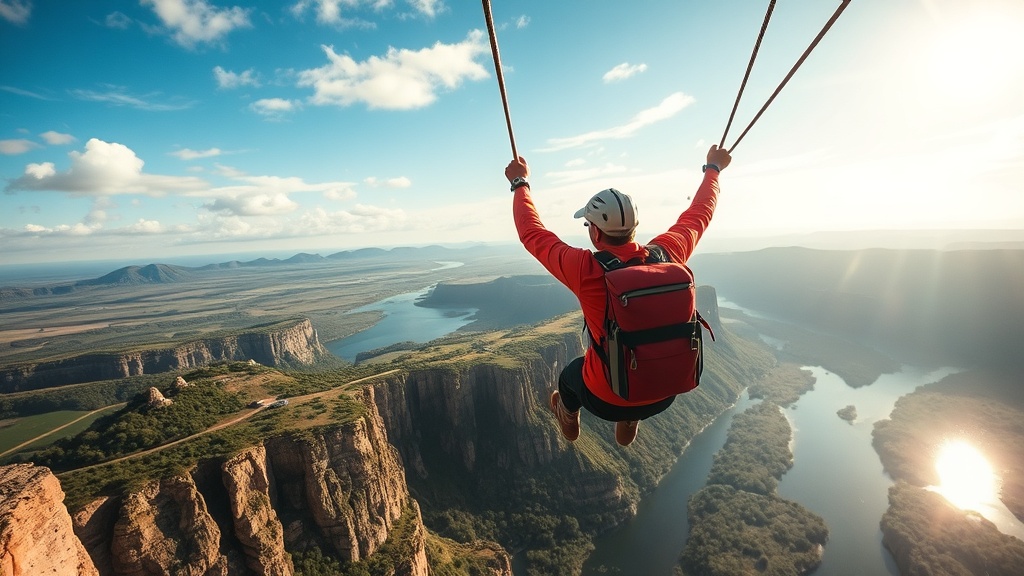
Leaping Into the Abyss: A First-Timer's Guide to Bungee Jumping
What This Guide Covers
This guide breaks down everything a first-time bungee jumper needs to know before taking the plunge—from selecting reputable operators and understanding safety protocols to preparing mentally and physically for the experience. Whether the goal is conquering a fear of heights, ticking an item off a bucket list, or simply seeking the purest adrenaline rush available in adventure travel, the information here ensures the jump is safe, memorable, and worth every penny spent getting to the platform.
Choosing the Right Jump Location
Not all bungee jumps are created equal. The height, scenery, and operator reputation vary dramatically across destinations, and first-timers should prioritize safety records over Instagram-worthy backdrops.
AJ Hackett Nevis Highwire in Queenstown, New Zealand, remains the gold standard for first-time jumpers. At 134 meters (440 feet), it's the highest bungee in New Zealand and offers an 8.5-second freefall. The platform sits above the Nevis River canyon, and jumpers are transported to the pod via a cable car. AJ Hackett has operated since 1988 with zero fatalities—a safety record built on rigorous equipment checks and staff training programs that exceed ISO safety standards.
For those in Europe, Verzasca Dam in Ticino, Switzerland, delivers a 220-meter (721-foot) jump from the concrete structure made famous by the James Bond film GoldenEye. Trekking Team AG operates this site during the summer months (May through October), and the jump costs approximately 285 CHF ($320 USD). The height is substantial enough to provide a genuine rush without the technical complexity of some higher-altitude operations.
In North America, Royal Gorge Bridge in Colorado offers a 320-meter (1,053-foot) option through Over the Edge Adventures. The jump spans the Arkansas River with the canyon walls providing dramatic scenery. Operating season runs April through October, weather permitting, with jumps priced at $299 per person.
Asia's standout is Macau Tower in China, operated by AJ Hackett. At 233 meters (764 feet), it's the world's highest commercial bungee jump. The experience includes a certificate, video footage, and photos packaged at 3,688 MOP (approximately $460 USD). Jumpers land on a specially designed airbag rather than water, which eliminates one variable for nervous first-timers.
Understanding the Physics and Safety Systems
Modern bungee jumping relies on latex rubber cords engineered to stretch to 300-400% of their resting length. A standard cord for a 100-meter jump measures roughly 9 meters at rest. The elasticity creates a smooth deceleration that reduces the g-force on the jumper's body to approximately 2.5-3g at the bottom of the rebound—comparable to aggressive braking in a sports car.
Operators use redundant systems for every connection point. At AJ Hackett locations, this means:
- Two separate ankle harnesses, each capable of supporting the full load independently
- Primary and backup bungee cords, with the backup engaging only if the primary fails
- Body harness attachments for jumpers over 235 pounds (107 kg), distributing force across the torso rather than ankles alone
- Daily load testing of all equipment using calibrated weights
The Body Mass Index (BMI) requirements vary by operator, but most enforce minimum weights between 35-45 kg (77-99 pounds) and maximums around 110-120 kg (243-265 pounds). These limits ensure the cord stretches appropriately—too light, and the rebound doesn't generate enough momentum; too heavy, and the cord approaches its maximum safe extension.
Weather conditions matter more than most first-timers realize. Operations typically suspend when wind speeds exceed 25 knots (46 km/h) or during electrical storms. Rain alone rarely stops jumps, but wet platforms increase slip risks during the initial leap.
Preparing Mentally for the Platform
The 15 minutes before a jump produce measurable physiological responses: elevated heart rate (often 120-150 bpm), increased cortisol, and heightened alertness. These reactions are normal and, paradoxically, part of why people seek the experience. The key is managing the anxiety without suppressing it entirely.
Experienced jump masters recommend specific techniques:
- Controlled breathing: Four counts in, hold for four, out for four. This activates the parasympathetic nervous system and prevents hyperventilation.
- Visual focus: Pick a fixed point at eye level before looking down. The Nevis Highwire platform includes a target painted on the opposite canyon wall specifically for this purpose.
- The countdown commitment: Decide before stepping onto the platform that the jump happens on "3"—no exceptions. Hesitation at the edge rarely produces better outcomes; it just extends the discomfort.
"The fear doesn't disappear. You jump with it. That's the whole point." — AJ Hackett safety briefing, Queenstown
Jump masters encounter "freezers" regularly—people who climb the platform but cannot step off. Operators handle this professionally. At Macau Tower, staff are trained to recognize genuine panic versus manageable nerves, and they can abort the jump without penalty if safety becomes a concern. However, backing out after harnessing typically forfeits the jump fee, which provides external motivation to follow through.
Physical Preparation and What to Expect
Contrary to popular belief, bungee jumping requires no exceptional fitness level. The forces involved don't demand strength—properly fitted harnesses do the work. However, certain medical conditions automatically disqualify participants:
- Pregnancy (absolute exclusion at all reputable operators)
- Recent surgery or fractures (typically within 6 months)
- Epilepsy or seizure disorders
- High blood pressure exceeding 160/100 mmHg
- Dislocated shoulders (previous injuries increase risk during rebound)
Clothing should be snug but comfortable. Loose items—phones, wallets, sunglasses—must be removed or secured. Operators provide jumpsuits at some locations (Verzasca Dam requires them), while others allow regular clothing with proper inspection.
The physical sensation of jumping defies verbal description, but certain elements are universal. The first 2-3 seconds produce complete weightlessness. Wind noise dominates. Then the cord engages—not a jarring stop, but a progressive deceleration that feels surprisingly gentle. The rebound launches jumpers upward at roughly 60% of the initial drop speed, creating a secondary freefall in reverse. Most commercial jumps include 2-3 rebounds before the operator lowers the jumper to the landing zone.
Post-jump effects are minimal for healthy participants. Some report mild dizziness or wobbly legs lasting 5-10 minutes. The adrenaline crash typically hits 30-45 minutes after the jump, producing fatigue rather than continued euphoria. Planning a light meal and rest period afterward improves the overall experience.
Photography, Video, and Documentation
First-time jumpers universally regret not purchasing the photo package. Self-documentation is impossible—the harness configurations prevent reaching pockets, and the experience itself consumes 100% of cognitive attention.
Professional operators offer multi-angle coverage:
- Helmet-mounted GoPro cameras capturing the first-person perspective
- Fixed cameras on the platform documenting the leap itself
- Ground or water-level cameras tracking the descent and rebound
Pricing varies by location. At the Verzasca Dam, photo and video packages add 95 CHF ($107 USD) to the base jump price. Macau Tower includes media in its premium package but charges separately for basic jumps—215 MOP ($27 USD) for photos alone, 1,888 MOP ($235 USD) for full video editing.
The footage serves practical purposes beyond social media. Reviewing the video reveals body position during the jump—ideal form includes arms extended forward or held close to the body, never reaching for the cord. Jump masters use footage in post-jump debriefs to improve technique for those planning subsequent jumps.
Building Toward Multiple Jumps
Single jumps satisfy curiosity, but the activity rewards repetition. Second and third jumps eliminate the anticipatory anxiety, allowing jumpers to focus on technique and sensation. Many operators offer multi-jump packages at reduced rates—AJ Hackett's Nevis location sells a "Triple Thrill" pass for 375 NZD ($225 USD), three jumps at 125 NZD each versus the standard 275 NZD single-jump price.
Progressive jumpers explore variations:
- Tandem jumps: Two people attached simultaneously, available at Bloukrans Bridge in South Africa and select Macau Tower sessions. Combined weight limits apply (typically 180 kg maximum).
- Backward leaps: Facing away from the drop, relying entirely on trust in the equipment. Available at most locations upon request.
- Water touches: Timing the rebound to dip into the river or pool below. The Nevis Highwire offers controlled water touches during specific water level conditions.
- Night jumps: Limited locations including Macau Tower (special events only) and select Caribbean operations. Lighting transforms the experience entirely.
Final Considerations Before Booking
Bungee jumping is not a casual adventure activity. It demands respect for the equipment, the environment, and personal limits. Research operators thoroughly—verify their safety certifications (ISO 17024 for bungee jumping operations), read recent reviews focusing on staff professionalism rather than just the thrill factor, and confirm insurance coverage (most operators carry $10-20 million in liability coverage, but personal travel insurance should explicitly cover adventure sports).
The cost ranges from $100 USD at smaller operations to $460+ at premium locations like Macau Tower. This includes equipment, professional supervision, and the jump itself. Additional expenses—travel to remote locations like Queenstown or Verzasca, accommodation, and media packages—can double the total investment.
For the first-timer standing on that platform, 134 meters above the Nevis River or 233 meters above Macau, the moment compresses into pure presence. No past, no future—just the decision to step forward. That moment changes something. Not because the fear disappears, but because the jump happens anyway. That's the transaction bungee jumping offers: vulnerability in exchange for proof that the body can do what the mind doubts. The cord always catches. The only variable is whether the leap comes first.