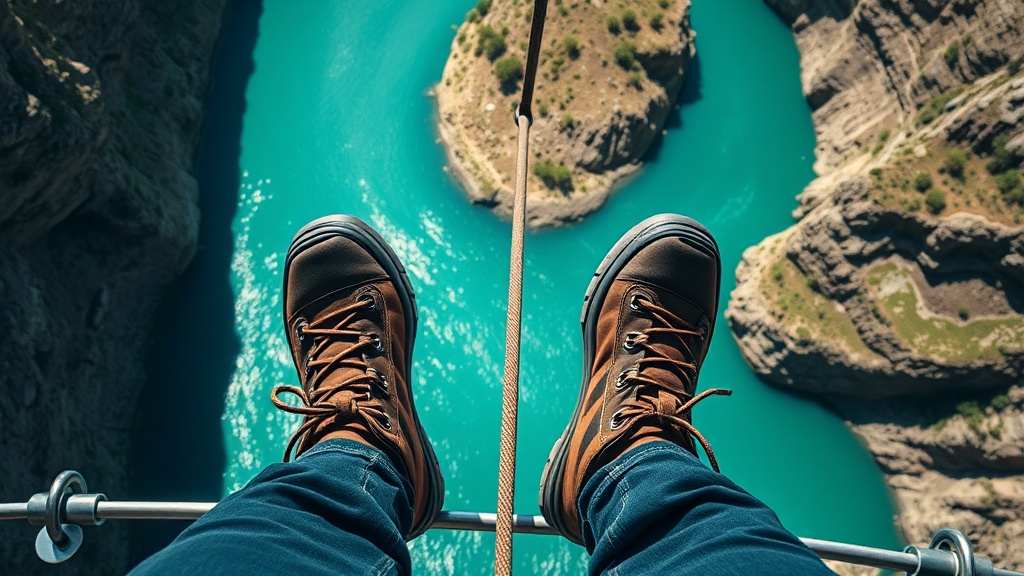
Platform Paralysis: How to Jump When Your Brain Says No

Alright so if your jump is booked and your brain is already spiraling, this is for you.
I work as a jump master at Nevis (134m), and I see platform paralysis every week. Confident people walk in buzzing, get clipped in, step to the edge, then lock up. Hands welded to the rail. Shallow breathing. Legs gone heavy.
I still feel it too, even after 400+ jumps.
Fear is not the problem. Panic plus indecision is the problem.
Is it normal to freeze on a bungee platform?
Yes. 100% normal.
Your nervous system reads height as threat and can fire a fight/flight/freeze response before your logical brain catches up. Cleveland Clinic’s breakdown includes freeze as a common reaction, not a rare one. Same deal in the neuroscience literature: Royal Society research describes freezing as a protective state under threat, not weakness.
So if you freeze, don’t tell yourself “I’m a coward.”
Tell yourself: “My survival wiring is loud right now.”
That one reframe matters.
How long do you have to jump before panic takes over?
In real jump terms: about a 3-second action window once countdown hits 1.
If you hesitate at the edge, your brain starts negotiating:
- “Maybe next round.”
- “Maybe the wind changed.”
- “Maybe I need another minute.”
Mate, that’s platform paralysis kicking in.
You beat it by deciding before the countdown: “On one, I go.”
No second vote.
How do you beat platform paralysis?
This is the exact anti-freeze sequence I coach.
Where should you look right before the jump?
Look at the horizon or opposite ridgeline, not straight down.
Looking down too early spikes panic for a lot of first-timers. Keep your chin level and your eyes fixed until takeoff.
How should you breathe before stepping off?
Do 3 controlled breaths:
- Inhale 4 seconds
- Hold 1 second
- Exhale 6 seconds
Long exhale helps lower panic volume enough to move.
Why should you unclench your hands?
Because death-gripping the rail tells your body “immediate danger.”
Open your fingers. Shake your hands once. Drop your shoulders.
You’re signaling control back to your nervous system.
What should you say to yourself on the edge?
Use one cue phrase only:
- “Trust the cord.”
- “Forward, now.”
- “On one, I go.”
Short cue. Clear action.
When exactly should you move on countdown?
Move on “1.” Immediately.
Not 1…2…3…debate.
If you wait, freeze gets stronger.
How do you trust bungee equipment when your brain wants proof?
You trust it by verifying systems, not by pretending fear isn’t real.
Before I jump, I mentally run receipts:
- Operator safety briefing is clear and serious
- Weight is checked and setup is calibrated
- Harness/ankle setup is double-checked by crew
- Procedure is repeatable, not improvised
On AJ Hackett NZ’s safety page (checked March 5, 2026), they state they instigated a commercial bungy code of practice in 1990, run strict procedures, and disclose activity risks transparently. That’s what you want: visible standards and zero sketchy shortcuts.
If you want deeper prep before booking, read:
- Your First Bungee Jump: Everything Nobody Tells You
- Bungee Safety Checklist Before You Book
- Nevis 134m Full Review
What if you freeze hard and still can’t go?
Reset once. No shame.
- Step back for 20-30 seconds.
- Shake out arms and legs.
- One sip of water.
- Run your 3-breath cycle.
- Re-approach with one cue phrase.
Still frozen after one reset? It is completely fine to call it and come back another day.
That’s judgment, not failure.
Which mistakes make platform paralysis worse?
These are the usual killers:
- Looking down too soon
- Waiting after countdown
- Letting friends yell over jump crew instructions
- Hiding fear instead of naming it
- Trying to “logic” your way out of adrenaline at the edge
Acknowledge fear, then execute anyway.
How many people freeze and still end up jumping?
A lot.
Jump journal reference: Jump #387 at Nevis, overcast day, crosswind pushing through the valley. I watched a 68-year-old visitor freeze for roughly 40 seconds, step back, reset with breaths, then absolutely SEND IT on the second approach. Came up laughing and crying at the same time.
That story is normal here, not unusual.
What should first-timers know before summer adventure bookings?
Book with verified operators only, and prep your head as hard as you prep your travel.
If you’re booking Nevis, the official Nevis Bungy page currently lists from NZD $395 adult (checked March 5, 2026), plus standard age/weight limits and medical disclosure requirements. Always re-check right before purchase since pricing and conditions can change.
Also: if you have heart conditions, pregnancy, recent concussion, or other medical concerns, get medical clearance first and disclose honestly at check-in.
For filming setup, use a stable chest rig before jump day:
FAQ: Platform Paralysis
Is platform paralysis normal on a first bungee jump?
Yes. It’s one of the most common first-timer reactions.
Can you ask for another countdown if you freeze?
Yes. Good operators expect this and will walk you through a reset.
Does looking down make fear worse?
For most first-timers, yes. Horizon focus usually works better.
Should I force myself to jump if I’m panicking hard?
No. Reset once. If it still feels unsafe, call it and come back later.
What helps more: confidence or commitment?
Commitment. Confidence is optional. Action on “1” is the key.
You don’t need to be fearless.
You need a plan, a verified operator, and one committed step.
Trust the cord.