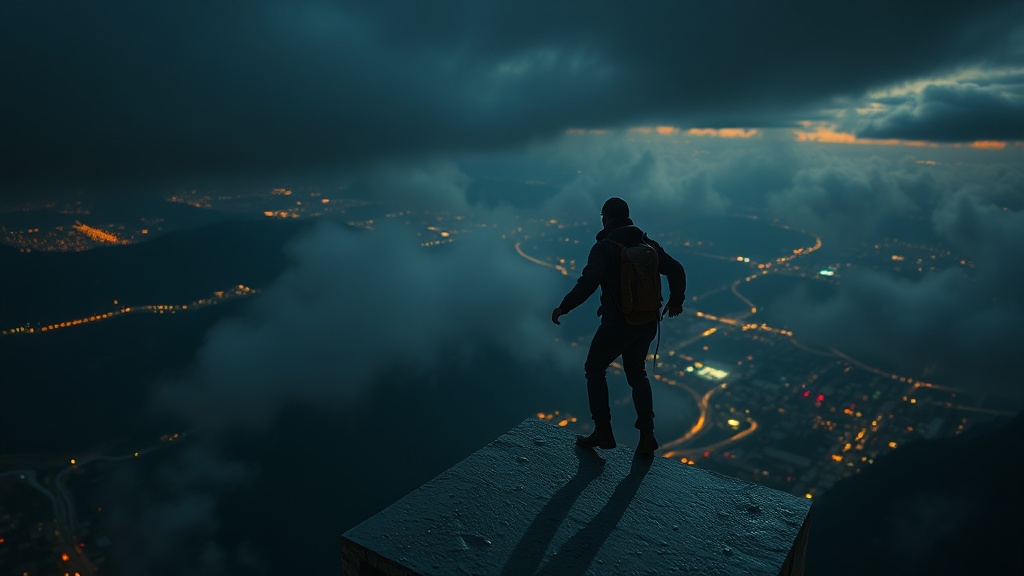
Why the Most Terrifying Moment Isn't the Fall—It's the Platform

The Misconception That Keeps People Grounded
Most people assume the scariest part of bungee jumping happens mid-air—that stomach-dropping moment when gravity takes over and you're plummeting toward the ground. They're wrong. After 400+ jumps across five continents, I can tell you with absolute certainty: the terror peaks before you ever leave solid ground. The platform—that narrow strip of metal or wood suspended over a void—is where your mind wages war against your body. It's where rational thought meets primal fear, and where most first-timers either commit or back out. Understanding what actually happens up there—and why it matters for your travel plans—can transform your entire adventure travel experience.
This isn't about convincing you that bungee jumping is "safe" (it is, statistically speaking, safer than driving to the jump site). It's about preparing you for the psychological reality that awaits at jump destinations worldwide. Whether you're eyeing the 134-meter Nevis Highwire in New Zealand or considering the 233-meter Macau Tower jump in China, the platform experience varies dramatically—and knowing what to expect can mean the difference between the rush of a lifetime and a paralyzing panic attack.
What Actually Happens to Your Brain on the Platform?
Your amygdala—that ancient almond-shaped cluster responsible for fear responses—doesn't care about statistics. It sees height, registers danger, and floods your system with cortisol and adrenaline before your conscious mind can intervene. This happens regardless of how many jumps you've logged. I still get nervous on platforms. That's the point. The fear doesn't disappear with experience; you simply learn to coexist with it.
The platform creates a unique psychological pressure cooker. You're harnessed, briefed, and surrounded by professionals who've done this thousands of times. Yet your feet refuse to move. Your hands shake. Your mouth goes dry. This isn't weakness—it's your brain doing exactly what evolution designed it to do. The problem? Your survival instincts haven't caught up to modern adventure tourism. They don't understand that a 12-millimeter latex cord rated for tons of force is fundamentally different from falling off a cliff.
The duration of platform terror varies by person. Some jumpers commit within seconds. Others stand frozen for minutes, locked in internal negotiation with themselves. I've seen experienced skydivers—people who willingly exit aircraft at 15,000 feet—freeze completely on a 50-meter bungee platform. The confined space, the proximity to the drop, the inability to "ease into" the experience like you would with a running skydive exit—it all compounds into something uniquely intimidating.
Does Platform Height Change the Psychological Experience?
Absolutely—and not in the ways you might expect. Common wisdom suggests higher platforms equal more fear. That's partially true, but the relationship isn't linear. A 43-meter bridge jump often feels more terrifying than a 134-meter canyon swing because of context. Bridge platforms are narrow, exposed, and frequently sway in wind. You can see the water or ground rushing by beneath you. The intimacy of the height—being able to visually process exactly what you're about to fall toward—amplifies the fear response.
Contrast this with the Macau Tower or similar super-high structures. At 233 meters, the ground becomes abstract. It looks like a map, not a landing zone. Your brain struggles to process the scale, which can actually reduce immediate panic. These platforms are also typically wider, more stable, and enclosed by partial barriers. The jump itself is more intense due to the extended freefall, but that initial platform moment? Strangely manageable for many people.
Jump sites understand this psychology and design accordingly. The Nevis Highwire platform—suspended by cables over a canyon—creates exposure that triggers primal responses regardless of your rational preparation. The Verzasca Dam jump in Switzerland (famous from GoldenEye) offers a concrete walkway that feels more secure until you reach the edge and see 220 meters of vertical granite. When planning your adventure travel itinerary, consider not just the height but the platform design. Are you seeking maximum adrenaline from the first step, or would you prefer a more gradual psychological buildup?
How Do Different Jump Sites Handle Platform Anxiety?
Professional operations have developed specific protocols for platform paralysis. The countdown method—"Three, two, one, bungee!"—isn't just theatrical. It creates a mental framework for commitment. Once the countdown starts, your brain shifts from "Should I do this?" to "How do I time this correctly?" This reframing is subtle but powerful. It doesn't eliminate fear; it redirects it.
Some operators use the "look up" technique. Staring at the horizon rather than the drop disrupts the visual feedback loop that maintains panic. Others employ buddy systems where jump masters physically position themselves beside nervous jumpers—not to push (that would be unsafe and unethical) but to provide human-scale reference points. Your brain processes a person standing casually at the edge as evidence that the situation might be survivable after all.
Training platforms exist at some destinations. These lower-height practice jumps (typically 20-30 meters) let you experience the protocol without the full psychological weight of a major jump. They're worth seeking out if you're traveling specifically for bungee jumping and want to work up to the headline attractions. The Kawarau Bungy Centre in Queenstown offers exactly this progression, allowing you to build platform confidence before tackling their 43-meter bridge or 134-meter Nevis options.
The Platform as Character Builder
Here's what travel brochures won't tell you: the platform terror is the entire point. The fear, the hesitation, the eventual commitment despite everything your body is screaming—this sequence creates the psychological payoff that makes bungee jumping transformative. Remove the platform anxiety and you've got a brief thrill ride, not a life-altering experience. That moment when you override your survival instincts and step forward anyway? That's where growth happens. That's why people cry, laugh uncontrollably, or stand in stunned silence after their jump. They've just proven something profound to themselves about their own capabilities.
Can You Prepare for Platform Anxiety Before You Travel?
You can prepare, but you can't eliminate the experience. Visualization helps—spending time mentally rehearsing the platform moment, the countdown, the step forward. Exposure to heights in controlled environments (rock climbing, tall buildings, viewing platforms) can reduce the novelty shock when you arrive at your jump destination. Physical fitness matters less than most people assume, though good cardiovascular health helps manage the adrenaline dump.
What actually works is reframing your expectations. Don't travel expecting to feel confident on the platform. Travel expecting to feel terrified—and to act anyway. This mindset shift removes the secondary anxiety of "Why am I still scared?" which compounds the primary fear. Everyone is scared up there. The professionals jumping beside you are managing fear, not absent of it. Your job isn't to conquer the fear before you arrive. Your job is to show up, strap in, and step off despite it.
Choose your first jump site thoughtfully. Some travelers prioritize the highest jump or the most famous location. I'd argue first-timers should prioritize operational quality and platform design over raw statistics. A well-run 50-meter jump with patient staff and a stable platform builds the confidence foundation you'll need for more ambitious adventures. Save the 200-meter monsters for your second or third jump, once you've proven to yourself that you can handle the platform moment.
The travel planning implications are real. Budget extra time at your jump location. Don't schedule a jump between tight transportation connections. If you freeze on the platform for ten minutes—which is completely normal—you don't want the pressure of a departing bus adding to your stress. Build buffer time. Build recovery time. The post-jump adrenaline high is intense and disorienting; you'll want space to process it before moving to your next adventure.